The Next Generation of Programmatic OOH Is Being Built Around Automation, Standards and AI
The Out of Home industry is evolving with a focus on simplifying the ecosystem through automation and standards.
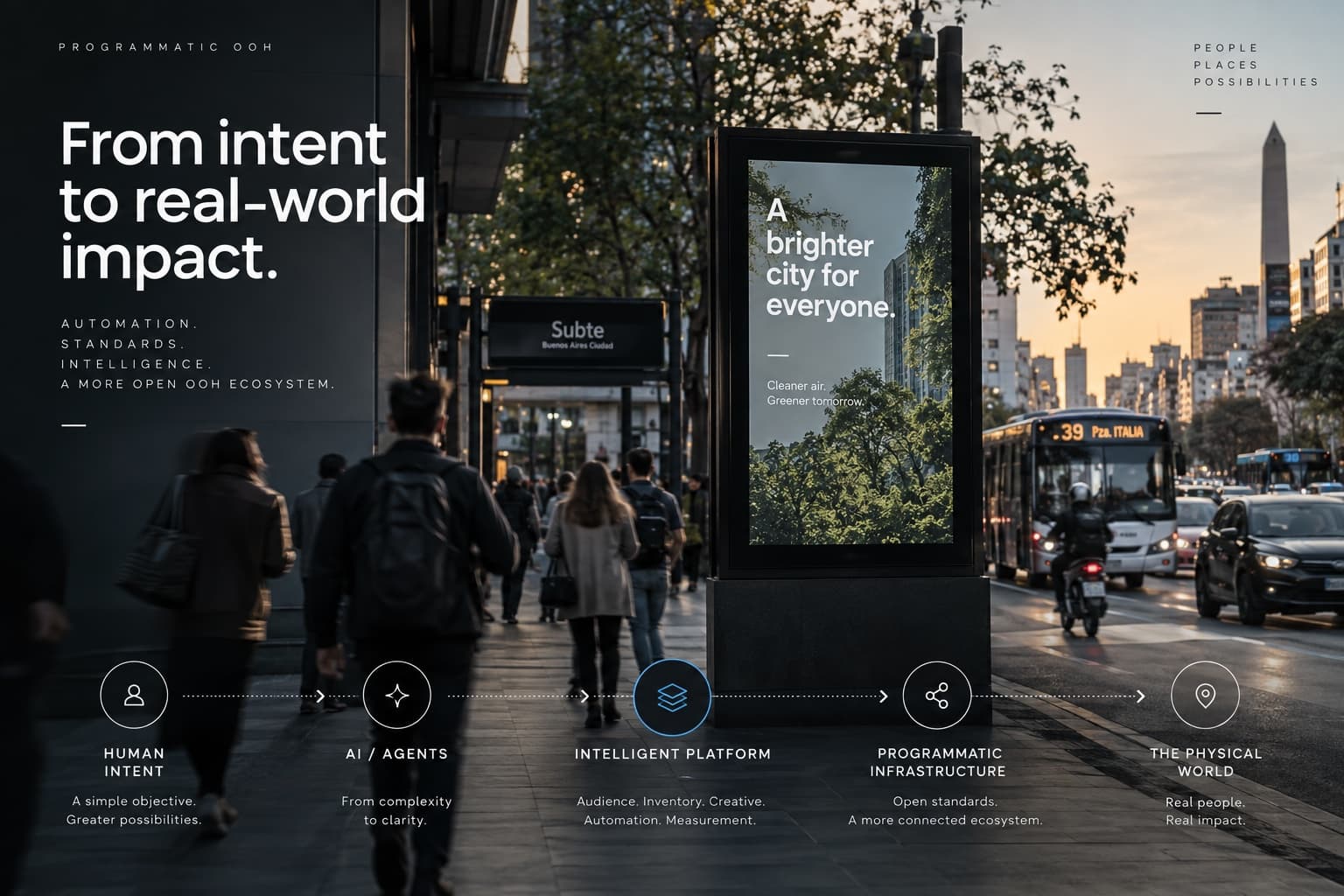
The Out of Home industry is evolving beyond just digitizing screens and making inventory available programmatically. The focus is now on simplifying the ecosystem to make it more understandable, transactional, and autonomous.
Industry Shift: Automation and Standards
This shift is evident with the launch of the OAAA Programmatic & Automation Center of Excellence, which unites media owners, technology providers, agencies, and brands to modernize Out of Home. Their priorities are clear: standardization, automation, measurement, interoperability, and AI.
At Taggify, we see these as interconnected elements forming the backbone of the next generation of programmatic OOH, principles that are integral to our development of Taggify V3.
Reducing Complexity in OOH
While programmatic advertising has made inventory accessible, OOH remains complex due to varied inventory definitions, screen characteristics, and transaction mechanisms. The OAAA Center of Excellence prioritizes standardization and optimization, which are crucial for automation. Machines need a common language to make effective decisions.
From Buying to Autonomous Workflows
OAAA's focus on Workflow Automation and Agentic AI marks a significant evolution. The future of advertising involves not just automated transactions but also automated decisions and workflows. Imagine an advertiser starting with a simple objective like "Reach potential car buyers near dealerships." An intelligent platform should translate this into actionable steps: identifying audiences, selecting inventory, allocating budget, and optimizing performance.
Taggify V3: Integrating Intelligence
Taggify V3 aims to create an ecosystem where DSP, SSP, audience intelligence, measurement, and creative systems work together. Our goal is to minimize the gap between an advertiser’s intent and campaign execution. This requires understanding inventory, matching audiences, evaluating opportunities, and adapting creatives—all within a structured, machine-readable framework.
The Role of AI and Standards
AI is more than a chatbot; it acts as an orchestration layer between human intent and advertising infrastructure. OAAA envisions automation creating a translation layer between OOH complexity and media buying systems. We foresee another layer translating human intent into structured actions.
Transitioning Interfaces to Agents
Traditional advertising platforms rely on dashboards and reports. Future systems will feature agents that translate objectives into strategies, identify audiences, and adapt creatives. This shift allows humans to focus on strategy and creativity rather than software operation.
The Importance of Standards
Agentic systems need structured information, consistent inventory definitions, and standardized reporting. OAAA's work on shared data definitions and machine-readable standards is crucial, as standardization enables automation and scalability.
A Programmable Physical World
Digital Out of Home is transforming physical environments into a programmable media layer. Screens are becoming part of a network that understands audience, location, context, and performance, allowing advertising to focus on moments rather than just screens.
Building a Connected Future
OAAA's Programmatic & Automation Center of Excellence signals the industry's direction towards standards, automation, and AI. At Taggify, we align with this vision, focusing on connecting advertisers, audiences, media owners, and the physical world intelligently. The future of programmatic OOH will be defined by how well the ecosystem orchestrates these connections to achieve advertiser goals.
More ideas for programmatic DOOH teams
Continue with practical reads on audience intelligence, inventory strategy and measurable real-world media.
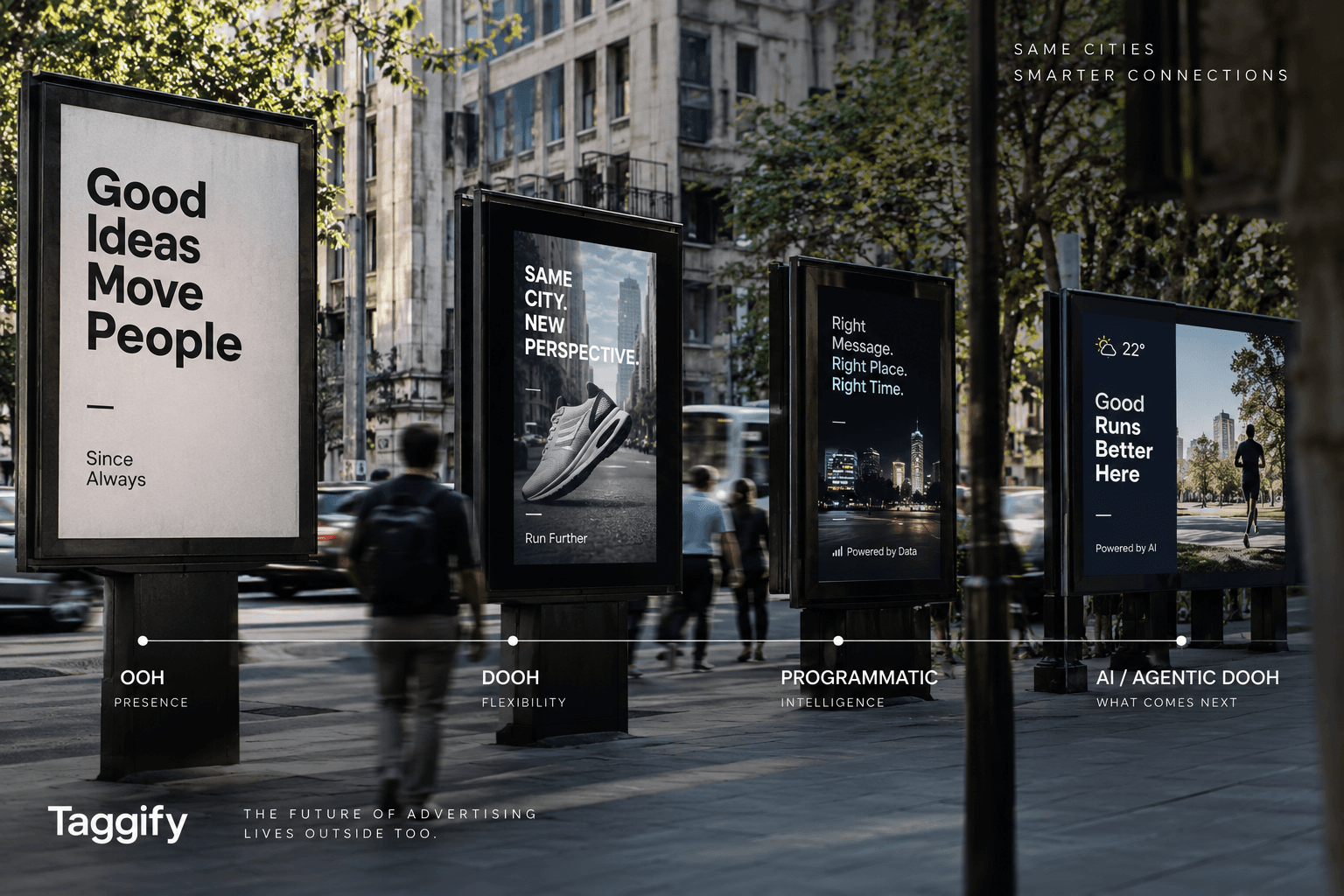
In the Attention Economy, Out of Home Has an Unfair Advantage
Out of Home advertising excels by capturing real-world attention, offering unique advantages in the fragmented media landscape.
Impressions vs Results: Why Measuring OOH Is No Longer Just Counting Screens
For years, the question that defined a good out-of-home campaign was simple: how many people saw it? Impressions, reach, frequency. Those numbers used to be enough to justify the spend. Today, impressions are just the starting point for verifying the real value of out-of-home media. Here's why.

The State of Out-of-Home Advertising in 2026
The latest global spending report from WOO (World Out of Home Organization) highlights a significant figure: global OOH closed 2025 at $54.2 billion, a 15% increase from the previous year. This marks the fifth consecutive year of growth for the medium, now accounting for 5.1% of total global advertising investment. However, the interesting aspect is not the total itself. It lies in how that total is composed and what still needs to grow in our region. The world is looking at more screens than ever, and LATAM is just beginning.