Audiences don’t live in a prompt
AI can interpret a brief, but understanding an audience in the physical world requires data, signals and measurement models. Metrica connects intent with actionable evidence for programmatic DOOH.
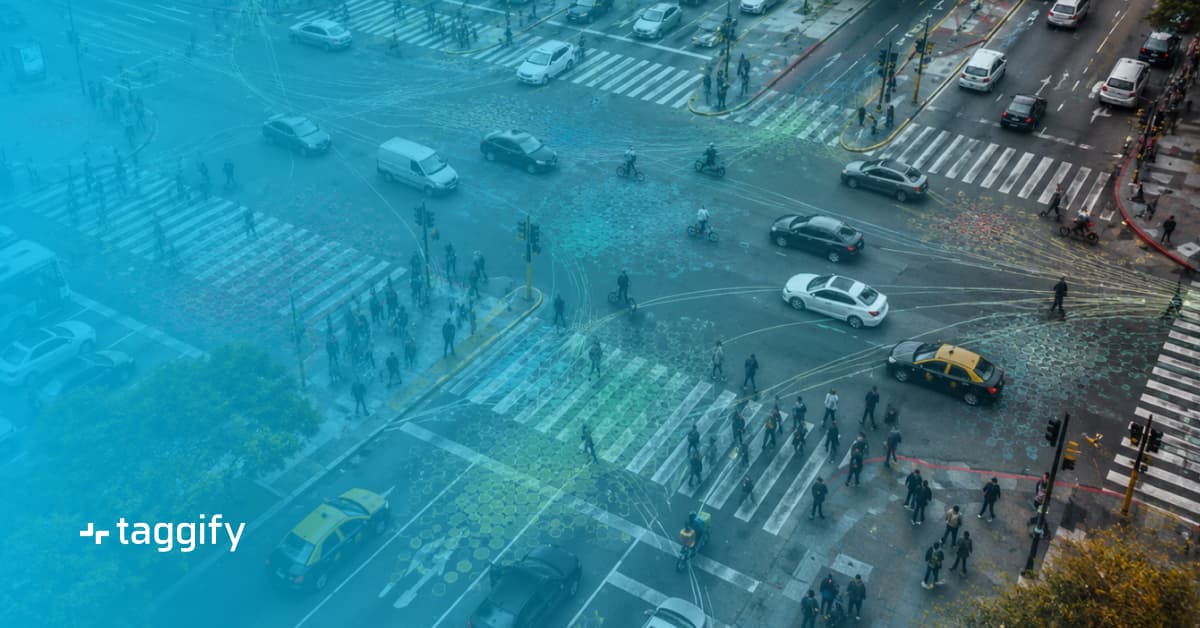
The difference between understanding a sentence and understanding an audience
Language models have changed the way we work with information. They can summarize documents, structure ideas, write code, interpret briefs and help teams explore scenarios at a speed that felt distant only a few years ago.
That makes it tempting to assume that if a model understands what we ask, it also understands the world where that decision will be executed.
In digital out-of-home advertising, that difference matters.
A brief may say: “I want to reach young professionals near gyms and office areas after 6 PM.” A language model can explain the intent, propose a strategy and write a coherent recommendation. But turning that intent into a defensible DOOH plan requires something else: physical-world data, available inventory, mobility signals, location context and models that separate a plausible answer from a measurable decision.
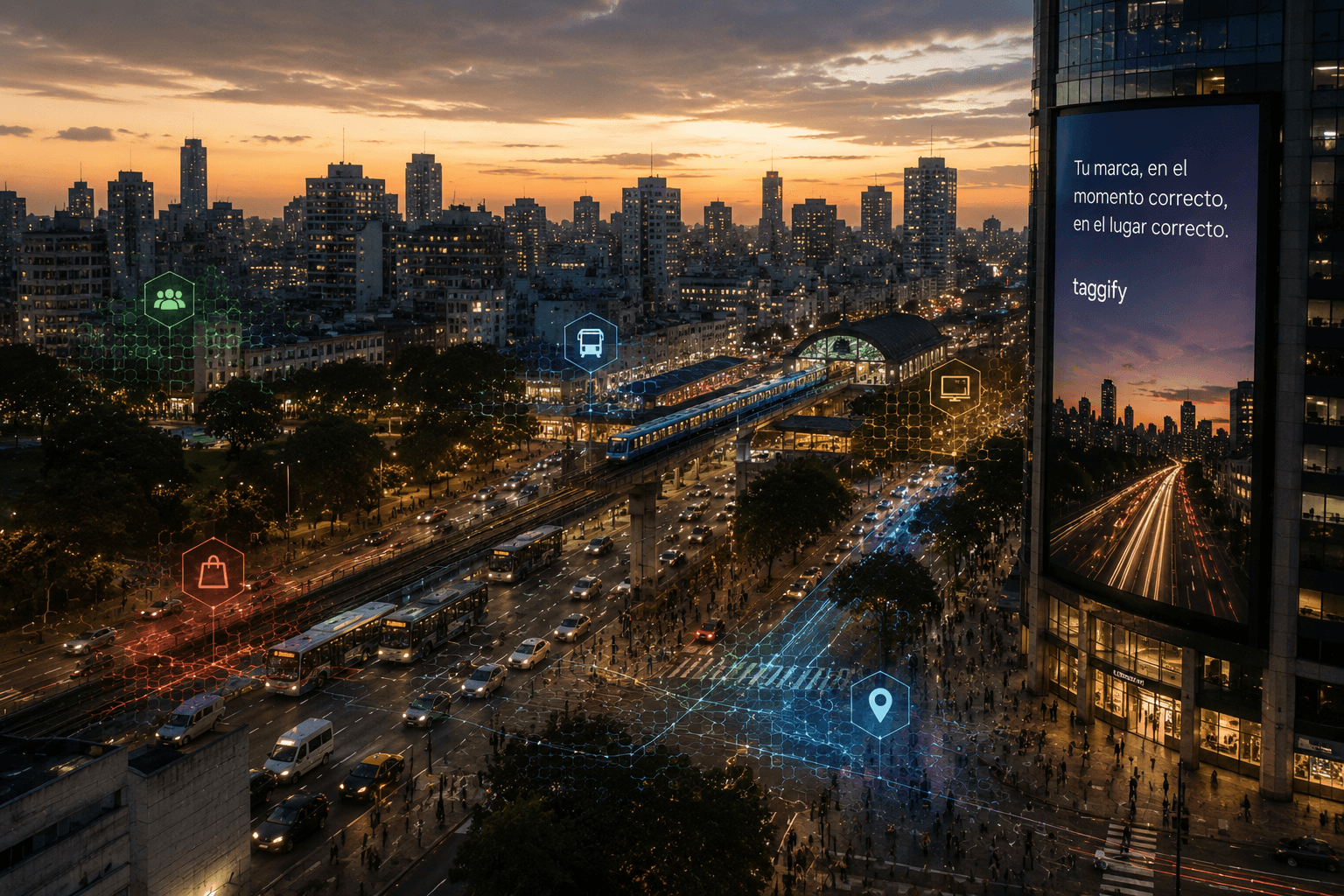
Audiences do not live in the prompt. Audiences move through the city.
The problem with plausible answers
An answer can sound right and still not be enough for media planning.
Saying that a screen is “near” a point of interest is not sufficient. Teams need to know what near means for that campaign, which screens exist within that area, which formats are available, which hours have higher exposure potential, which signals support that reading and how much confidence the data deserves.
The same is true for foot traffic. A high-traffic area does not automatically mean a high opportunity to see for every screen in that area. Visibility depends on concrete factors: orientation, prominence, dwell, share of loop, surrounding context and signal quality.
Language helps formulate the question. Operational answers require computation.
What a DOOH platform has to resolve
To move from campaign intent to an actionable decision, a planning system has to connect several layers:
- real screen inventory;
- geographic hierarchy and area resolution;
- aggregated audience data;
- POIs and surrounding context;
- hourly signals and observed traffic when available;
- mobility, foot traffic and commute flows;
- census and demographics;
- data coverage, freshness and signal quality;
- forecast, OTS and post-campaign learning.
None of those layers should be treated as text-generated intuition. They are signals that need origin, status, coverage and clear limits.
That is where Metrica fits.
Metrica as an evidence layer
Metrica is Taggify’s data and measurement layer for turning inventory, H3, POIs, census, traffic, mobility and signal quality into actionable audiences, defensible forecasts and post-campaign learning.
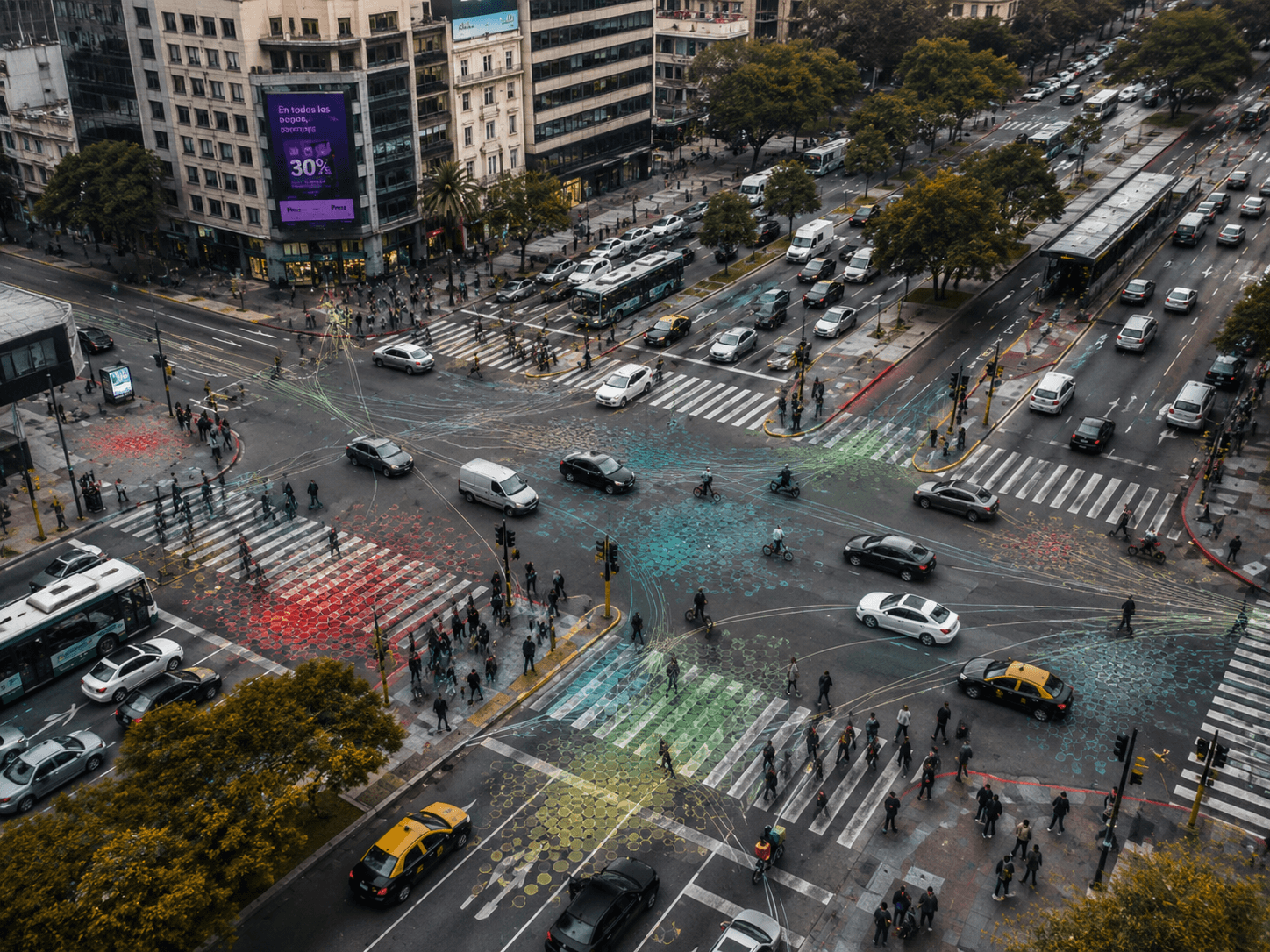
Its role is not to “guess” an audience. Its role is to support better decisions: which screens to consider, which areas make sense, which signals are ready, which data is missing, what coverage exists and how an estimate can be explained without selling false precision.
This also changes how AI should be used inside the workflow.
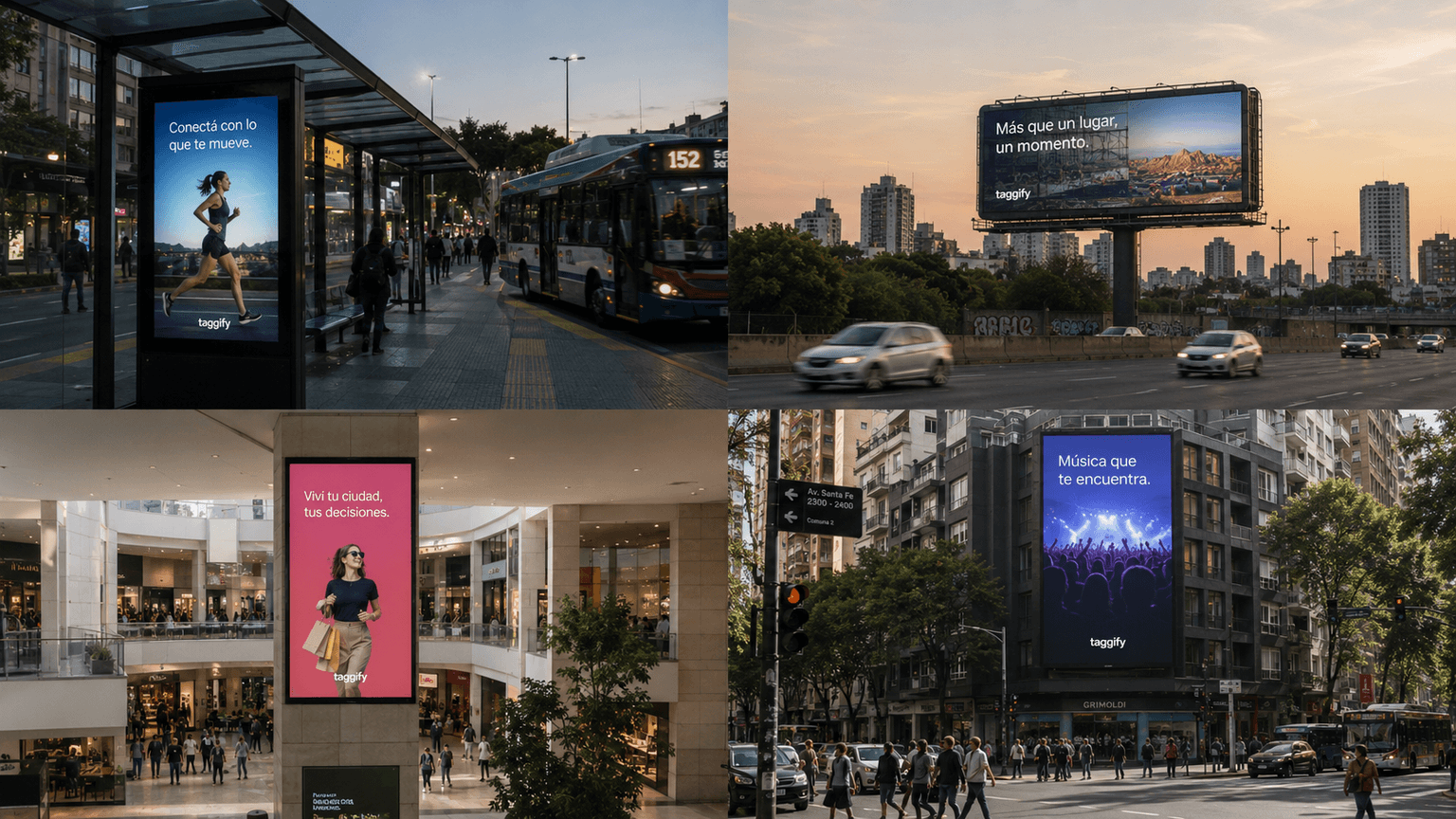
AI can help interpret an objective, accelerate exploration and translate a strategy into clear language. But when the question is where to activate, when to activate, which screens to prioritize or how to defend an estimate, the platform needs structured data and measurement models.
Area flow is not visual opportunity
One of the most important distinctions in DOOH is separating area flow from screen-level opportunity to see.
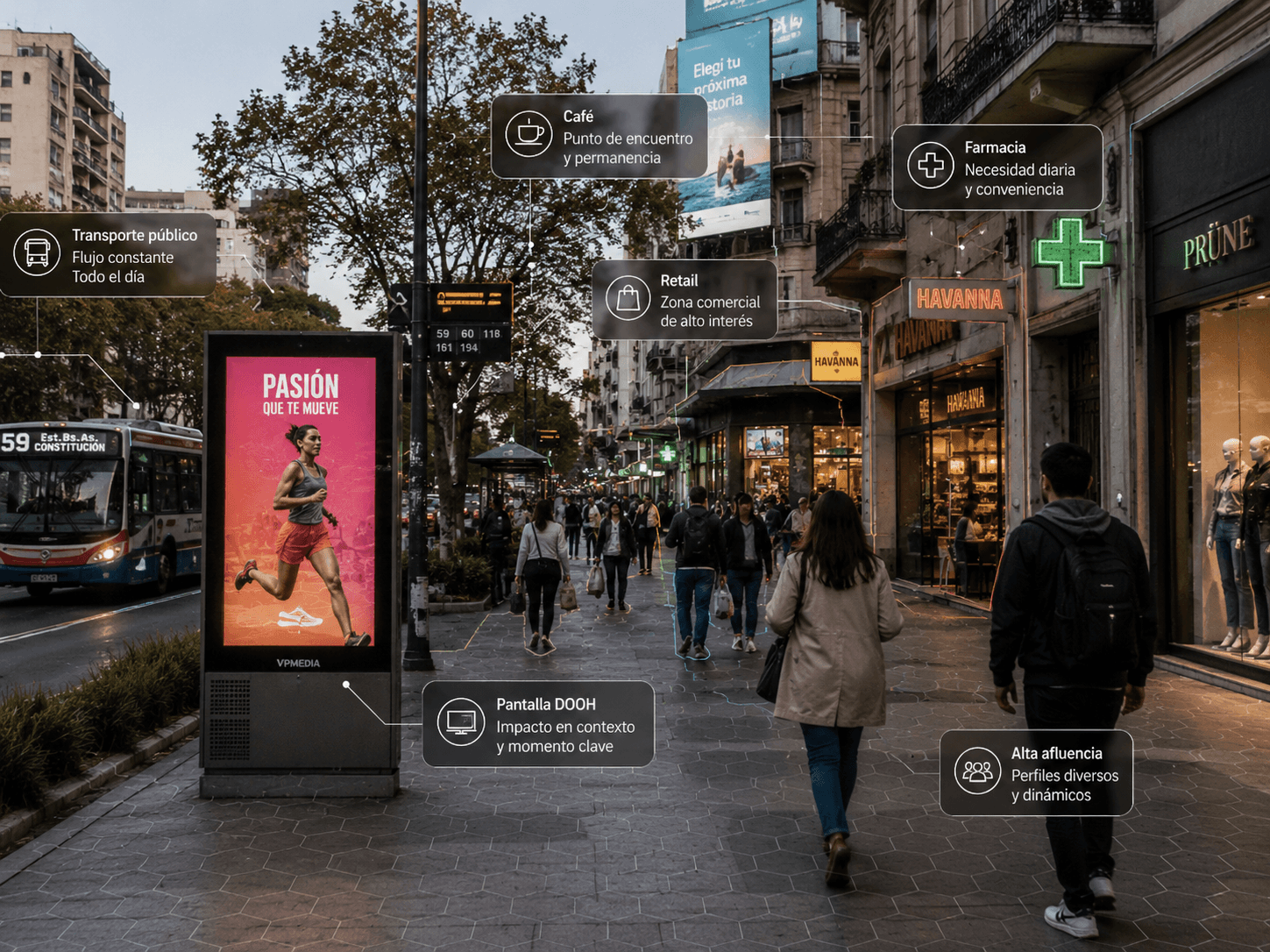
An area can have high movement and still not give a specific screen a proportional visual opportunity. The reason is simple: not every person moving through an area has a reasonable opportunity to see every screen in that area.
Useful planning needs to go beyond the area baseline. It needs to move toward screen-modeled metrics, with factors such as visibility, attention, dwell, prominence and slot share within the loop.
That distinction avoids one of the most common measurement traps: turning a general signal into an overly precise promise.
What improves for brands and agencies
When planning is grounded in evidence, teams can ask better questions:
- which audience are we trying to reach;
- which contexts make the message more relevant;
- which screens fit that combination;
- which forecast can we defend before activation;
- what did we learn after the campaign;
- which data was robust and which signals need more coverage.
This makes DOOH clearer for buyers, planners, traders and account teams. Not because it removes the complexity of the medium, but because it organizes it into a shared workflow.
The conversation shifts from “AI recommended these locations” to “these locations match the brief, have available signals, show this level of coverage and can be activated through the DSP.”
Privacy, aggregates and clear limits
Understanding audiences better does not mean tracking individuals.
The right direction for programmatic DOOH is to work with aggregated, contextual and privacy-safe signals. The goal is not to identify a person in front of a screen, but to understand movement patterns, context, affinity and opportunity to see clearly enough to make better media decisions.
That honesty is part of the value. A mature platform does not just show numbers: it also shows where they come from, what they represent and what they do not represent.
From prompts to defensible decisions
Language models are very good at understanding intent. That is already valuable for an industry full of briefs, constraints, audiences, formats and campaign goals.

But a DOOH campaign does not run in language. It runs on real screens, in real locations, with audiences moving across specific times and contexts.
Taggify’s opportunity is to connect both worlds: use AI to make exploration more natural, and use Metrica to keep decisions grounded in evidence.
Because in DOOH, the best recommendation is not the one that sounds the smartest. It is the one that can be explained, measured and activated.
More ideas for programmatic DOOH teams
Continue with practical reads on audience intelligence, inventory strategy and measurable real-world media.
pDOOH: Building Brand Trust in a Saturated Environment
Trust is one of the most decisive assets for brands. It is not just an intangible value: it is the reason consumers choose a brand and are willing to pay more for its products. In a context where attention is scarce and advertising credibility is being questioned, Programmatic Out-of-Home Advertising is an effective medium for strengthening the relationship between brands and people.
How to improve a DOOH campaign with Taggify's audience forecasting
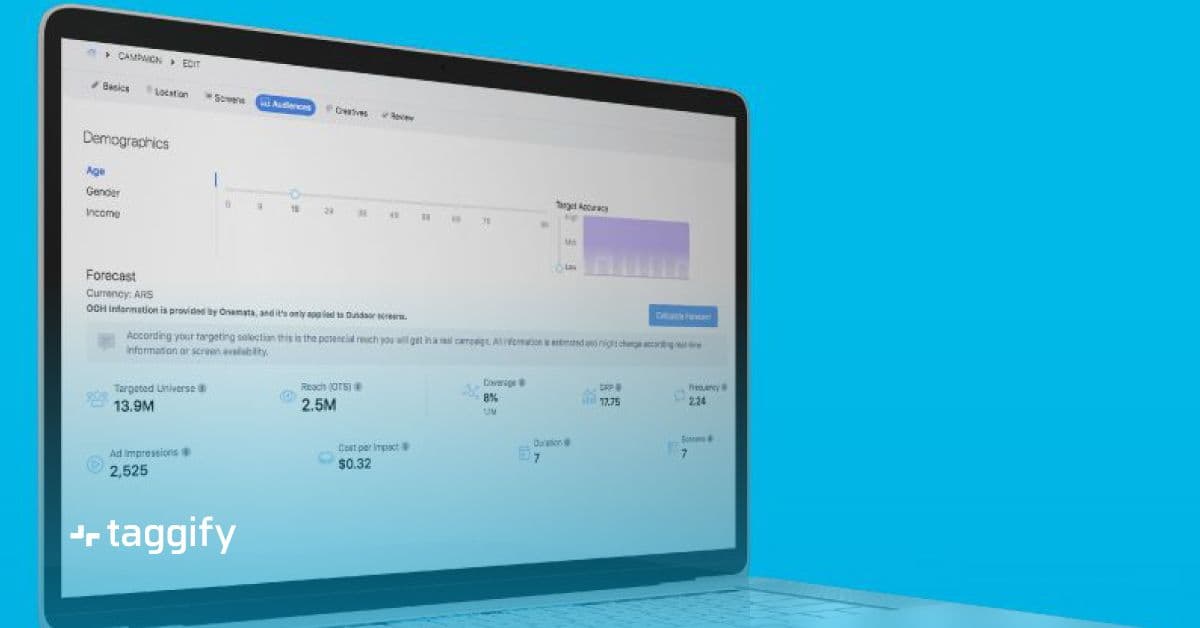
Digital out-of-home advertising is highly effective because it leverages data to reach the right audience with the right message. Taggify offers a forecast that allows you to predict the performance of a DOOH campaign. Here's how.

Automation in Outdoor Advertising: How Programmatic Drives Efficiency and Simplifies Processes
Traditional out-of-home (OOH) advertising has historically been one of the most powerful and accessible channels in the advertising ecosystem. However, launching a campaign on the street used to involve a lengthy process: phone calls, email chains, lengthy negotiations, and little flexibility for optimization. Today, thanks to automation and programmatic buying (pDOOH), out-of-home advertising has evolved. We explore how pDOOH enables advertisers to plan, launch, and optimize campaigns in minutes through automation, cost efficiency, and actionable data.